Table of Contents
Hybrid inverters have moved from “nice-to-have” to “core infrastructure” for residential and small commercial solar in 2026. Time-of-use tariffs, dynamic pricing, virtual power plant (VPP) programs, and the growing expectation of backup power have pushed homeowners to look beyond simple grid-tie inverters. A modern hybrid inverter is no longer just a DC-to-AC converter—it’s an energy traffic controller that decides, in real time, whether your solar should power loads, charge a battery, export to the grid, or keep critical circuits alive when the utility goes down.
This article explains what matters most when choosing a hybrid inverter in 2026 and highlights proven options (and ecosystems) that installers and advanced homeowners frequently shortlist.
What a “Hybrid Inverter” Really Means in 2026
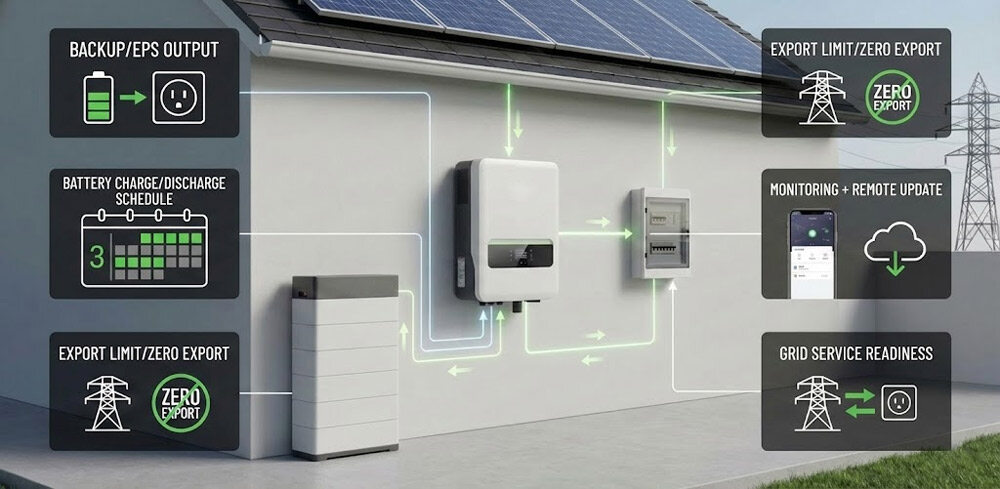
A hybrid inverter typically supports both PV and battery storage with intelligent control modes (self-consumption, backup, peak shaving, time-of-use shifting). Most modern hybrids also integrate:
-
Backup / EPS output (either whole-home or critical-load backup)
-
Battery charge/discharge scheduling
-
Export limiting / zero-export
-
Monitoring + remote updates
-
Grid services readiness (increasingly important as utilities standardize VPP participation)
Be careful with terminology: some brands sell a “hybrid-ready” inverter that needs extra hardware to do full backup; others include backup but require an external transfer device.
The 2026 Selection Criteria That Actually Matter
1. Backup capability: “socket backup” vs “whole-home”
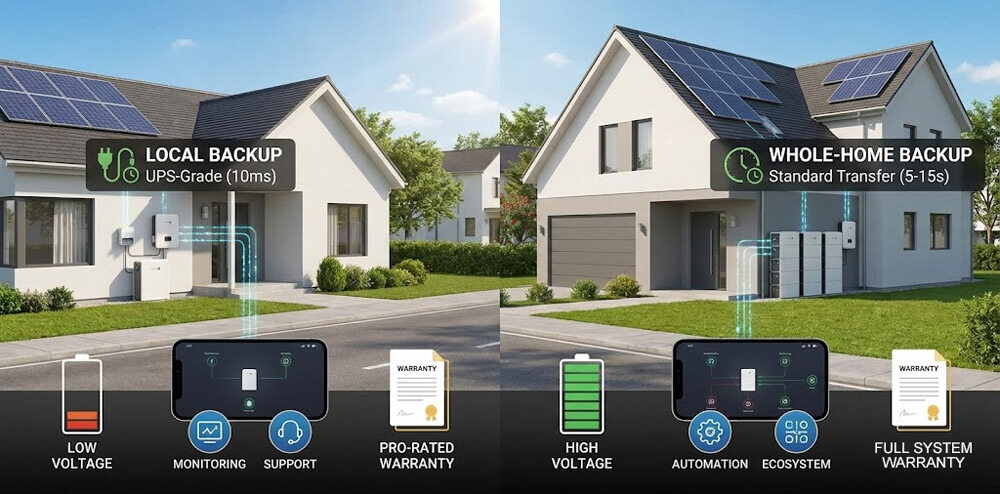
Backup features vary widely. Some products offer a single protected outlet for essential devices; others can run a whole panel with an automatic transfer interface. In professional design, the first question is always: What must stay on during an outage, and for how long? A “critical-loads” design can be cost-efficient and easier to permit, while “whole-home backup” demands more power electronics, more battery capacity, and often more careful load management.
A practical approach in 2026 is to design the home in “tiers”:
- Tier 1: communications + lighting + refrigeration + a few outlets
- Tier 2: kitchen circuits + garage door + select HVAC zones
- Tier 3: whole-home (with load shedding for peak appliances if needed)
Your backup goal largely determines which hybrid inverter class you should buy.
2. Transfer time: UPS-grade vs seconds
Transfer time is the difference between “my lights blinked” and “everything stayed seamless.” Some hybrid inverters and ecosystem designs aim for UPS-grade switching (typically around 10 ms), which is generally good enough that routers, computers, and TVs won’t reset. Other designs take longer (seconds), which may be fine for many household circuits but not ideal if you want uninterrupted power for sensitive electronics.
If your home office, security system, or medical devices demand continuity, prioritize systems advertised as UPS-level EPS switching, and confirm how that is achieved (internal relay, external backup interface, or a dedicated EPS output).
3. Battery voltage and compatibility
In 2026, battery choice is as important as inverter choice.
- High-voltage (HV) batteries often enable higher efficiency and lower current. That can mean thinner cables, lower heat losses, and easier scaling to higher power. HV stacks are common in many modern hybrid ecosystems.
- Low-voltage (LV) batteries can be flexible and cost-effective, and they remain common in budget hybrids and modular setups. However, LV systems run higher current at the same power, so cable sizing, busbar design, and installation quality become even more critical.
Compatibility is non-negotiable. Do not assume a battery will work because the connector “fits.” Professional installers use manufacturer compatibility lists and firmware notes to avoid commissioning failures, derating, or warranty issues.
4. Ecosystem strength: monitoring, automation, and support
In 2026, the “best inverter” is often the one with the best software + service network in your region. Firmware cadence, installer tools, warranty clarity, and spare parts logistics can matter more than a fractional efficiency advantage.
Look for:
- Stable mobile/web monitoring with clear energy flows
- Remote diagnostics for installers
- Frequent but reliable firmware updates (with release notes)
- Strong local distribution and support channels
- Clear documentation for grid compliance and export control
5. Warranty reality (and how it’s administered)
Warranty is more than the headline years. Two systems can both claim “10 years,” yet one may be far easier to service. Ask:
- Who handles claims locally (manufacturer vs distributor vs installer)?
- How quickly are replacement units typically shipped?
- Are failures handled as repair, replacement, or credit?
- Does the warranty require product registration?
- Are there conditions related to commissioning, firmware updates, or approved batteries?
For professional procurement, warranty is both a number and a process.
Top Hybrid Inverter Picks for 2026 (Professional Shortlist)
Below are widely shortlisted ecosystems in 2026. Exact model names and capabilities vary by region, grid code, and power class, so treat these as “families” rather than a single universal SKU.
1. Fronius GEN24 Plus (Primo / Symo) — Best “premium engineering + flexible backup”
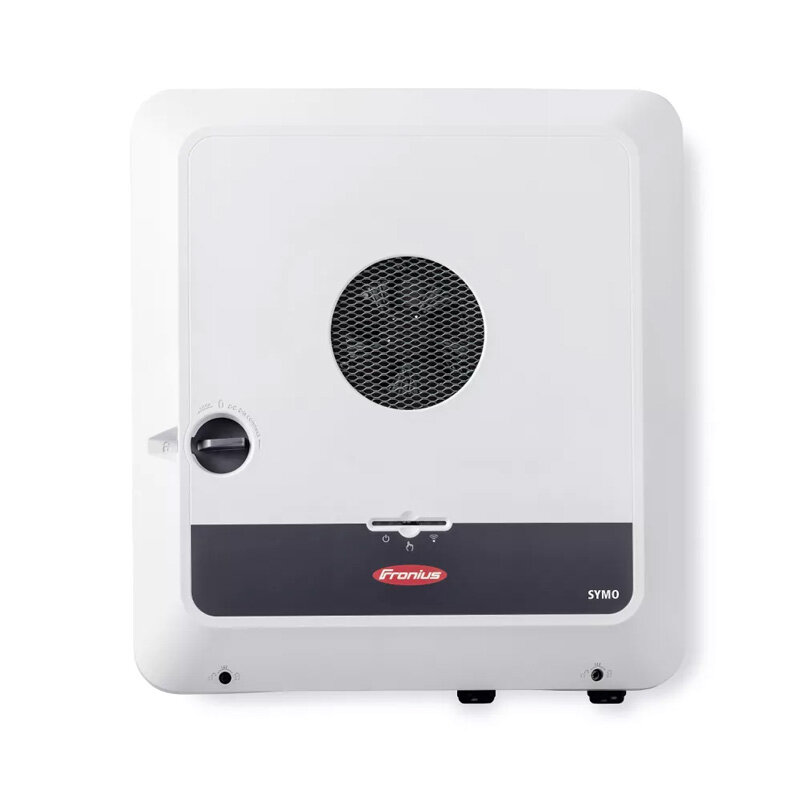
Fronius is frequently chosen when buyers want robust engineering, clear product positioning, and an upgrade-friendly approach. A notable advantage is the way backup is treated as a practical spectrum: from basic resilience that can keep essentials going, to more comprehensive backup configurations depending on the system design.
Why it’s strong in 2026:
- Premium build quality and installer confidence in supported markets
- Clear differentiation of backup options (basic vs expanded)
- Strong reputation for monitoring, support materials, and long-term reliability
Ideal for: homeowners who want a premium system with a realistic path from “basic backup” to “bigger backup” without replacing everything.
2. SolarEdge Home Hub Inverter + Backup Interface — Best for optimizer-based rooftops and a tight ecosystem
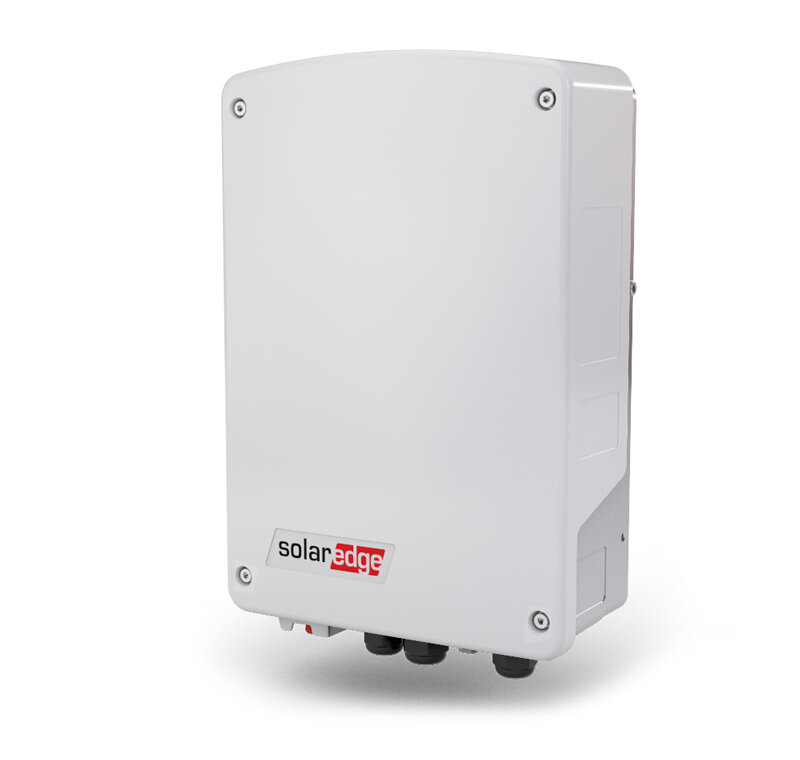
SolarEdge remains a go-to where module-level power electronics (optimizers) are beneficial: complex roofs, partial shading, different roof faces, or sites where you want more granular visibility and control.
Why it’s strong in 2026:
- Strong ecosystem integration (solar + storage + backup)
- Optimizer architecture can improve design flexibility on challenging roofs
- A mature installer channel in many markets
Ideal for: complicated rooftops (module-level control), homeowners who prefer a single vendor ecosystem and tight platform integration.
3. Huawei SUN2000 + Backup Box/SmartGuard + LUNA Battery — Best efficiency-forward DC ecosystem (where supported)
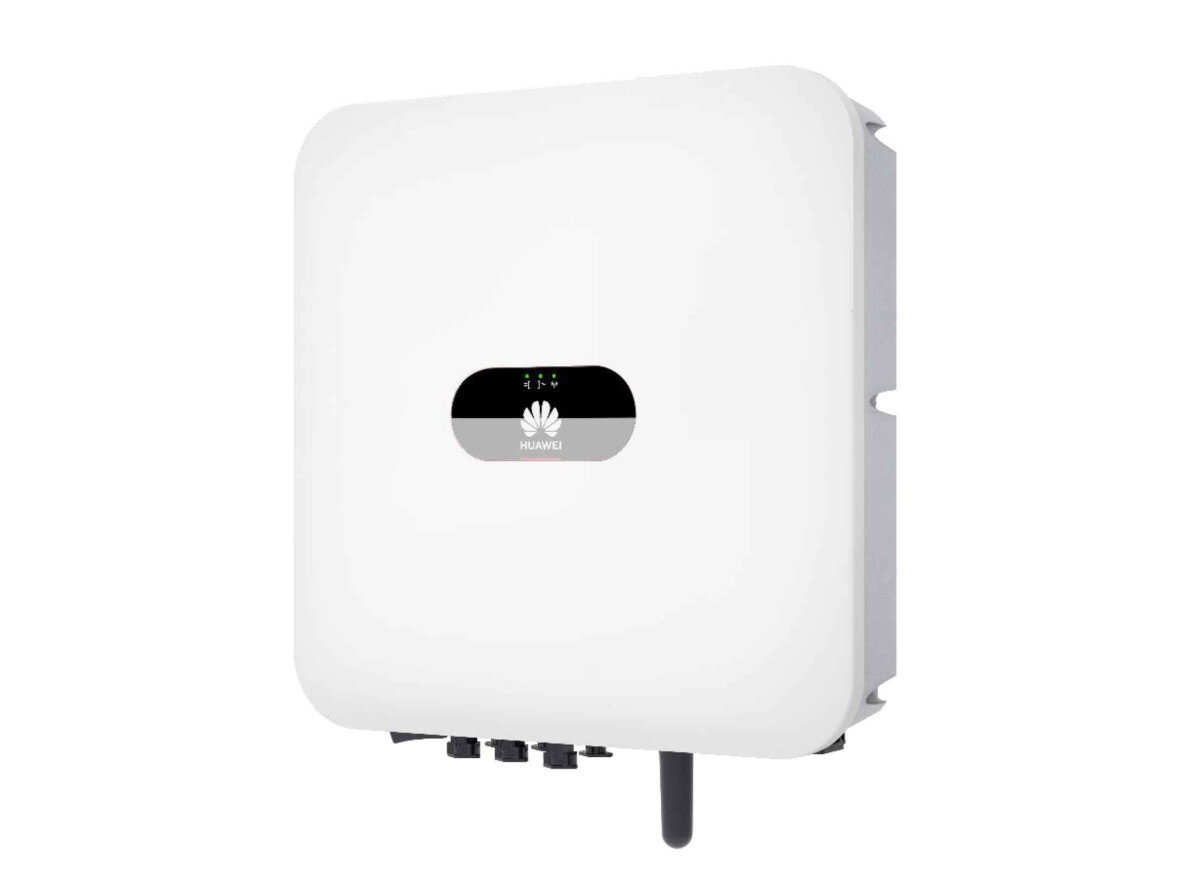
Huawei’s solar ecosystem is often associated with high headline efficiency, clean design, and a tightly integrated stack. In many regions, the battery and inverter combination is designed to behave as a single coordinated system, which can simplify commissioning and monitoring.
Why it’s strong in 2026:
- Cohesive ecosystem across inverter, battery, and backup components
- Often competitive efficiency and power density
- Strong monitoring and automation features (region-dependent)
Ideal for: regions with strong Huawei installer coverage and users who want a tightly integrated PV + battery stack.
4. Sungrow SH-RS (single-phase hybrids) — Best value/performance balance with fast backup switching
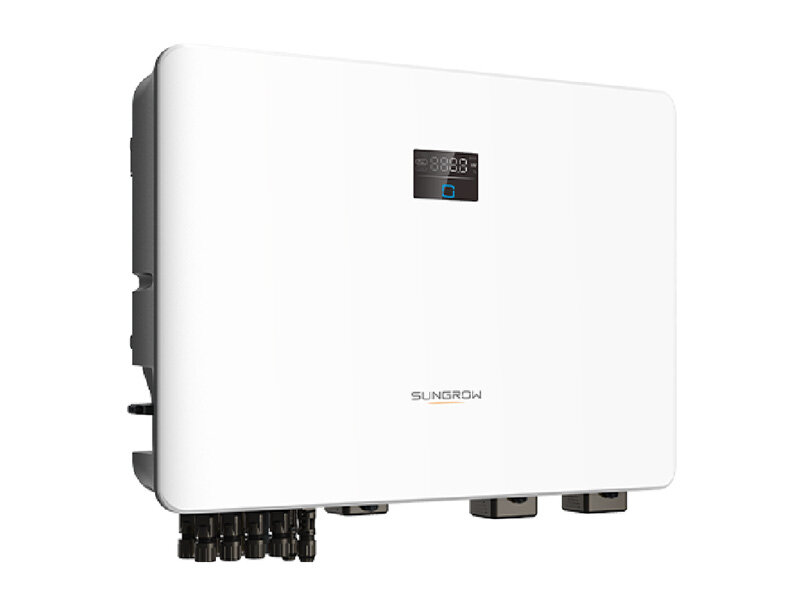
Sungrow frequently lands on professional shortlists as a “value without feeling cheap” option—particularly when fast EPS switching, practical battery voltage ranges, and stable performance are priorities.
Why it’s strong in 2026:
- Strong price/performance ratio in many markets
- Often offers UPS-grade class backup switching behavior
- Broad global footprint and mature product lines
Ideal for: cost-conscious buyers who still want modern backup behavior from a reputable manufacturer.
5. GoodWe ET (three-phase hybrid) — Best for three-phase homes and UPS-grade backup behavior
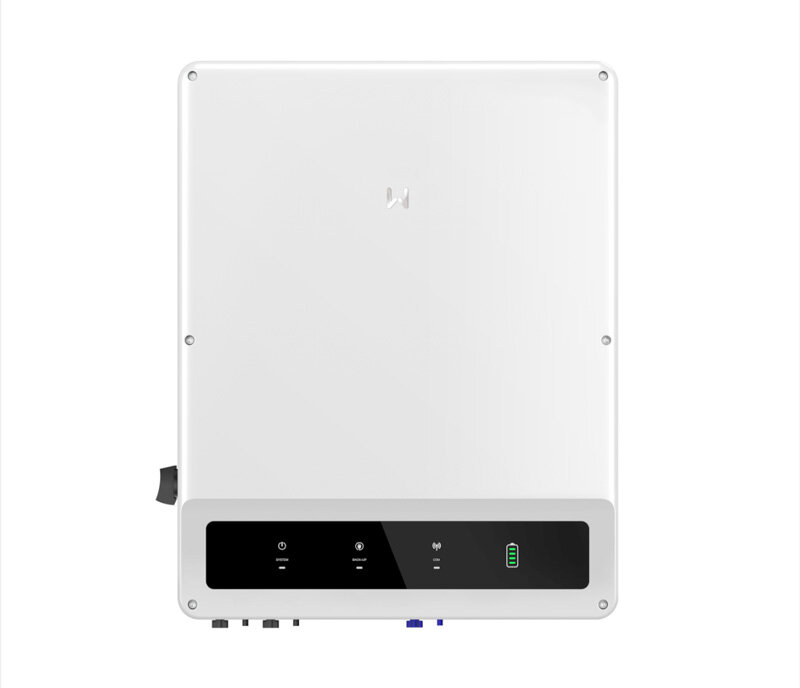
For three-phase homes and light commercial sites, the inverter must match the electrical reality of the building. The GoodWe ET family is commonly evaluated for its feature set (time-of-use shifting, export control, battery integration) and its “critical-load” backup behavior in appropriate configurations.
Why it’s strong in 2026:
- Designed for three-phase use cases
- Good control features for tariffs and export limits
- Frequently competitive in total installed cost
Ideal for: three-phase residences, small commercial, and anyone needing robust scheduling and grid interaction controls.
6. Growatt SPH — Best budget-friendly hybrid with a modern feature checklist
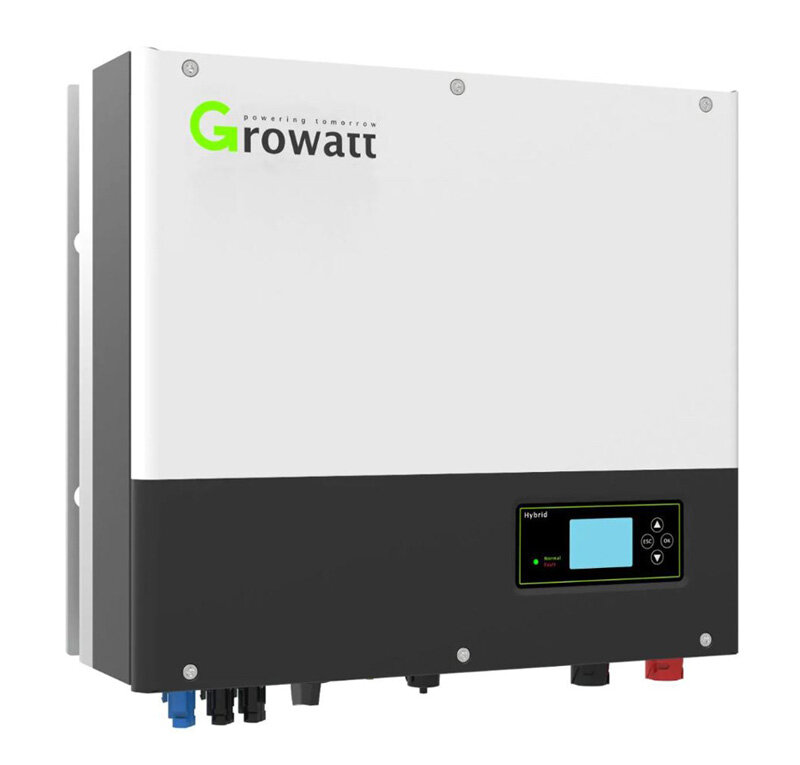
Growatt SPH hybrids are often considered when budget matters but buyers still want a modern feature set: basic battery integration, export control, and backup capability in the “UPS-grade class” range depending on model and region.
Why it’s strong in 2026:
- Strong value proposition
- Broad market availability
- Feature-rich for the price tier (when properly designed and installed)
Ideal for: cost-sensitive installs where the installer has strong commissioning experience and local support channels are reliable.
7. Victron MultiPlus-II (inverter/charger backbone) — Best for off-grid and advanced “hybrid-by-system-design”
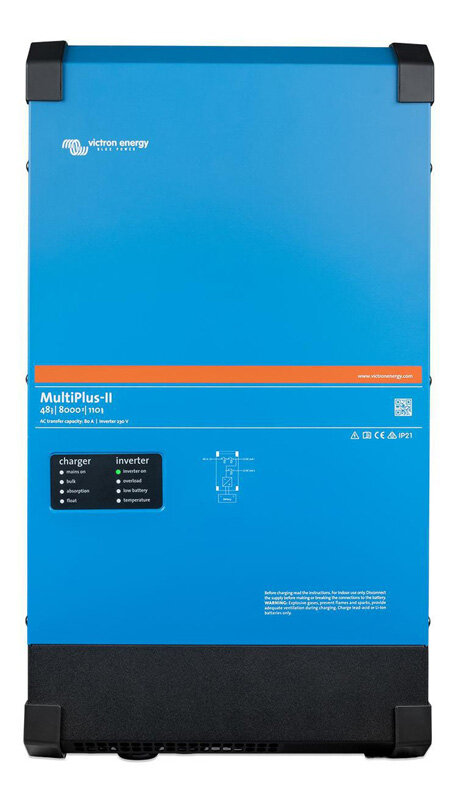
Victron is in a different category. Rather than a single all-in-one hybrid PV inverter, many Victron systems use an inverter/charger as the backbone, paired with separate MPPT charge controllers and a more modular architecture. This is frequently chosen for off-grid, marine, RV, or highly customized residential energy storage systems.
Why it’s strong in 2026:
-
Maximum design flexibility and modularity
-
Excellent for off-grid and complex multi-source systems (generator, shore power, PV, etc.)
-
Mature ecosystem for advanced control strategies
Ideal for: off-grid sites, marine/RV, or advanced home systems where flexibility matters more than “one box does everything.”
8. Neexgent NEX Model (hybrid PV inverter) — Best for cost-effective, integrated residential hybrid systems
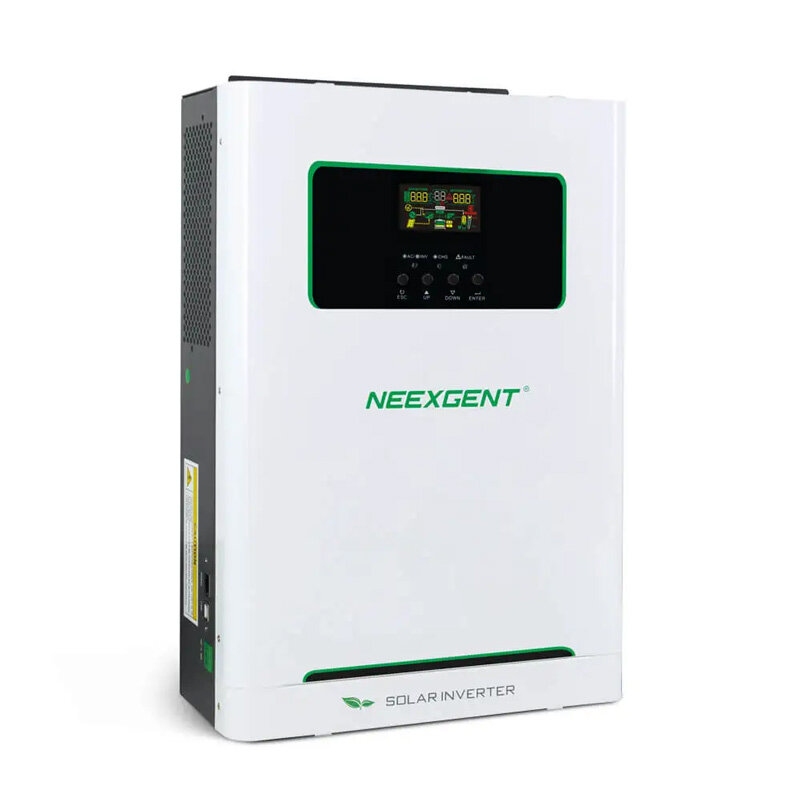
Neexgent positions the NEX Model as a conventional all-in-one hybrid PV inverter, integrating PV input, battery management, and grid interaction into a single enclosure. Unlike modular architectures such as Victron, the NEX Model follows a more traditional hybrid-inverter design focused on simplicity, integration, and residential deployment.
Why it’s strong in 2026:
- All-in-one hybrid design (PV + battery + grid in one unit)
- Simplified installation and commissioning compared to modular systems
- Suitable for standard residential hybrid and backup scenarios
- Competitive cost positioning for small to mid-size home systems
Ideal for: grid-connected or hybrid residential systems where ease of installation, compact design, and cost efficiency are more important than extreme modularity or off-grid customization.
Comparison Table (2026 Snapshot)
| Option |
Use Case |
Phase |
Backup |
Battery |
2026 Strength |
Best For |
| Fronius GEN24 Plus |
Premium solar + storage |
1φ / 3φ |
Tiered backup options |
HV (config dependent) |
Clear modes, upgradable |
Premium, future-proof |
| SolarEdge Home Hub |
Optimizer rooftops |
1φ |
Strong backup |
Integrated ecosystem |
Platform integration |
Complex roofs |
| Huawei SUN2000 + LUNA |
Integrated PV + battery |
1φ |
External backup unit |
HV stack |
High efficiency |
Strong local support |
| Sungrow SH-RS |
Value hybrid |
1φ |
UPS-class switching |
Wide voltage |
Price/performance |
Best value installs |
| GoodWe ET |
3-phase hybrid |
3φ |
UPS to critical loads |
HV |
TOU + fast backup |
3φ homes / small C&I |
| Growatt SPH |
Budget hybrid |
1φ |
UPS function |
Often LV |
Features vs price |
Cost-sensitive |
| Victron MultiPlus-II |
Modular ESS |
1φ / 3φ |
ms-level switchover |
Fully modular |
Max flexibility |
Off-grid / power users |
| Neexgent NEX |
Residential hybrid |
1φ |
EPS backup output |
HV lithium |
Simple all-in-one |
Affordable simplicity |
Note: “Best” depends on grid rules, installer familiarity, battery availability, and whether you want whole-home backup or only critical loads.
FAQs
What’s the difference between grid-forming and grid-following, and why is grid-forming popular in 2026?
Grid-following inverters rely on an existing grid signal to synchronize voltage and frequency.
Grid-forming inverters can create and regulate their own stable voltage and frequency when the grid is unavailable.
This capability improves backup performance during outages, especially for motor loads and rapid load changes, which is why grid-forming designs are widely discussed in 2026.
Why do THD and reactive power (Volt-VAR / Volt-Watt) matter for approvals?
Low Total Harmonic Distortion (THD) protects sensitive electronics and reduces stress on the grid.
Reactive power functions such as Volt-VAR and Volt-Watt support voltage stability.
These features are often required by modern grid codes for interconnection approval.
What is PV-to-battery charging rate, and why do people care in 2026?
The PV-to-battery charging rate defines how much solar power can be stored in the battery at one time.
If this limit is too low, midday solar production may be clipped or exported instead of stored.
Higher charging rates improve energy capture and speed up recovery after outages.
Do hybrid inverters support black start, and when is it important?
Black start allows a system to power up from the battery without any grid connection.
This is essential for full backup functionality during extended or unstable grid outages.
Not all hybrid inverters include this feature, so it should be confirmed during system design.
What’s the practical difference between AC-coupled and DC-coupled storage for hybrid systems?
DC-coupled storage is typically more efficient for charging directly from solar panels.
AC-coupled systems are useful for retrofitting batteries to existing solar installations.
The trade-off is added conversion losses and increased system complexity.