Solar panel installation design in 2026 is becoming more refined, efficient, and closely integrated with modern home energy systems. A strong design is no longer based on simply placing as many panels as possible on the roof. It considers energy demand, roof condition, shading, panel orientation, tilt, electrical configuration, maintenance access, battery compatibility, and the overall appearance of the property.
The best solar installation combines strong energy production with practical long-term use. From clean rooftop layouts to battery-ready systems and solar carports, thoughtful planning can improve performance while making the system easier to maintain and expand over time.
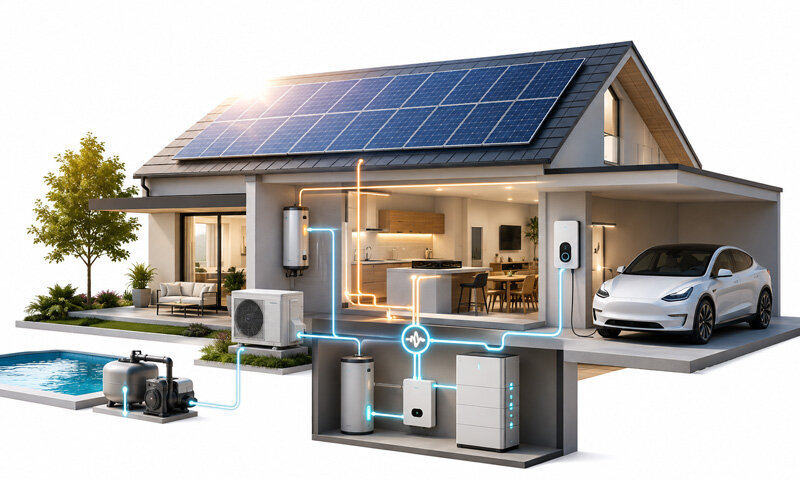
A good solar design starts with the household's actual electricity consumption.
Current utility bills provide a useful baseline, but future energy demand also matters. Electric vehicles, heat pumps, electric water heaters, pool equipment, induction cooking, and battery storage can all increase electricity use over the life of the system.
The solar array should therefore be sized around realistic long-term consumption rather than roof area alone.
System sizing also affects how much electricity still needs to come from the grid. Homeowners can continue to see utility charges after installation because having solar panels does not always eliminate every electricity charge. Grid connection fees, nighttime electricity use, seasonal production differences, financing costs, and local billing structures can all influence the final monthly cost.
A well-sized array balances available installation space with current and future energy needs.
High-efficiency solar panels are especially useful on homes with limited usable roof area.
Dormers, vents, skylights, chimneys, roof valleys, and architectural features can reduce the amount of space available for modules. Higher-output panels allow installers to generate more electricity from a smaller area while maintaining a cleaner layout.
Panel wattage should not be considered on its own. Physical dimensions also affect how efficiently modules fit on a roof.
A slightly smaller panel can sometimes create a better overall array than a larger high-wattage module because it fits around roof features more effectively.
The goal is to maximize total usable production from the available surface rather than simply choosing the highest-rated module.
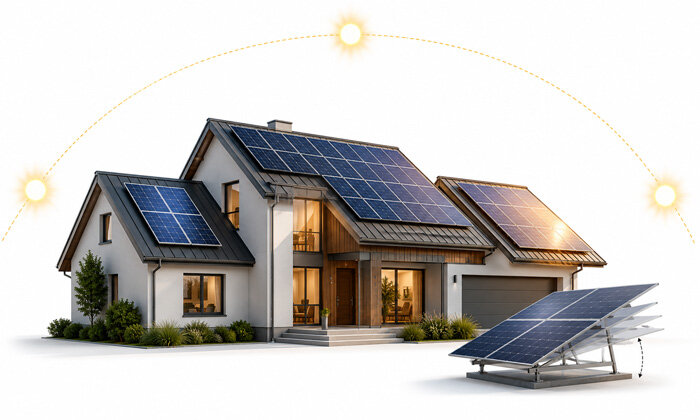
Solar aesthetics are becoming an increasingly important part of residential installation design.
Instead of scattering panels across every available roof section, many modern systems use rectangular arrays with aligned edges, consistent spacing, and balanced placement.
All-black modules and low-profile mounting systems can make the installation feel more integrated with the roof.
A clean layout also supports the broader effect solar may have on a property. The relationship between solar panels and home value depends on factors such as ownership, energy savings, system condition, local demand, and installation quality. A visually organized array can make the system feel more like a permanent architectural upgrade.
Performance should remain the priority, but strong solar design can deliver both efficiency and visual consistency.
Panel direction and tilt have a direct effect on energy production.
South-facing arrays are commonly used in the Northern Hemisphere because they can provide strong annual output, but east- and west-facing panels can also work well depending on the property and electricity-use pattern.
East-facing modules generate more energy earlier in the day, while west-facing panels tend to extend production later into the afternoon.
Tilt is equally important. The best angle for solar panels to maximize efficiency depends on latitude, roof pitch, seasonal sunlight, and the desired production profile.
Rooftop systems often follow the existing roof slope, while ground-mounted arrays provide more flexibility in selecting a specific tilt.
For homes with several usable roof planes, combining multiple orientations can spread solar production across more hours of the day instead of concentrating most generation around noon.
Shade analysis should be part of the design process before panel positions are finalized.
Trees, chimneys, dormers, antennas, neighboring buildings, and other structures can cast moving shadows across the array throughout the day.
Modern design software can estimate solar access across different roof sections and identify areas where shading would cause significant production losses.
Microinverters and power optimizers can also help manage systems where individual panels experience different sunlight conditions.
Electrical layout plays a role as well. Choosing between series and parallel solar panel connections affects system voltage, current, inverter compatibility, and electrical behavior.
Panel placement and electrical configuration should be planned together so the system works efficiently under real operating conditions.
Solar panels are long-term equipment, so the roof beneath them should be in good condition before installation begins.
Damaged shingles, leaks, weak decking, structural problems, and an aging roof surface can create complications later.
Replacing a roof after the solar array has already been installed may require panels and mounting equipment to be removed and reinstalled.
Roof work and solar installation are often most efficient when coordinated as part of the same project. Offers involving free roof replacement with solar panels also deserve careful review because roofing costs may be incorporated into financing, solar agreements, or other project pricing.
A strong installation begins with a roof that can support the system for many years.
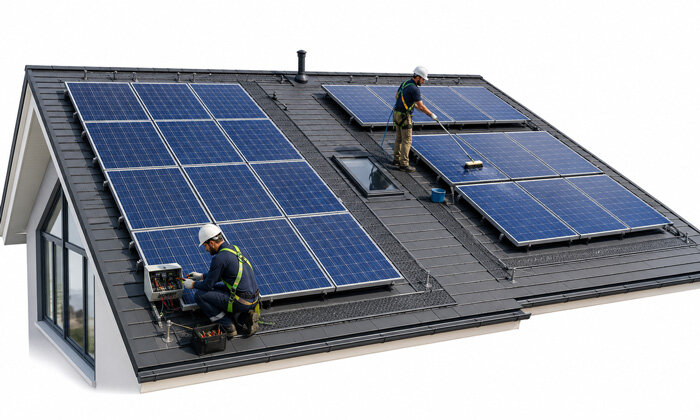
A well-designed solar array should remain accessible after installation.
Technicians may need to reach the roof for inspections, electrical troubleshooting, repairs, roof work, or equipment replacement.
Required setbacks and access paths should be incorporated into the layout instead of filling every available section with modules.
Panel cleaning is another practical consideration. Dust, pollen, leaves, bird droppings, and environmental debris can accumulate on certain systems. Proper solar panel cleaning methods help protect the surface and avoid unnecessary damage to modules or electrical components.
A layout with reasonable access makes long-term maintenance easier without significantly reducing productive roof space.
Monitoring should be treated as part of the solar system rather than an optional accessory.
Modern monitoring platforms can display daily production, real-time output, monthly generation, inverter status, battery activity, grid imports, and exports.
Some systems also provide module-level data.
This makes it easier to recognize performance changes and check whether solar panels are working properly before a minor issue becomes a long-term loss of production.
Unexpected drops in output can be associated with inverter faults, equipment communication problems, new shading, wiring issues, dirt accumulation, or individual module problems.
Monitoring is particularly useful for complex arrays with multiple orientations because each roof section may produce differently throughout the day.
Battery-ready design is becoming increasingly common in residential solar projects.
The solar array, inverter, electrical panel, backup circuits, and battery location can be planned as one connected system even when storage is added later.
This approach can reduce future electrical modifications.
A battery-ready installation may include compatible inverter equipment, reserved wall space, organized conduit routes, sufficient electrical panel capacity, and a clear location for backup load equipment.
Solar and storage can also be coordinated with EV charging and smart home energy management.
Treating the property as a complete energy system creates more flexibility than designing solar as an isolated rooftop installation.
Ground-mounted solar can be a strong alternative to rooftop installation.
Properties with open land may benefit from a ground system when the roof has heavy shading, limited structural capacity, poor orientation, or complicated geometry.
Ground-mounted arrays offer greater control over orientation and tilt. They are also easier to reach for inspections, repairs, and cleaning.
Electrical safety remains a core part of the design. Proper planning includes bonding, conductor routing, disconnects, and determining where solar panels should be grounded according to system architecture and applicable electrical requirements.
Ground installations require additional considerations such as foundations, trenching, land use, wiring distance, and permitting, but they can provide excellent performance on the right property.
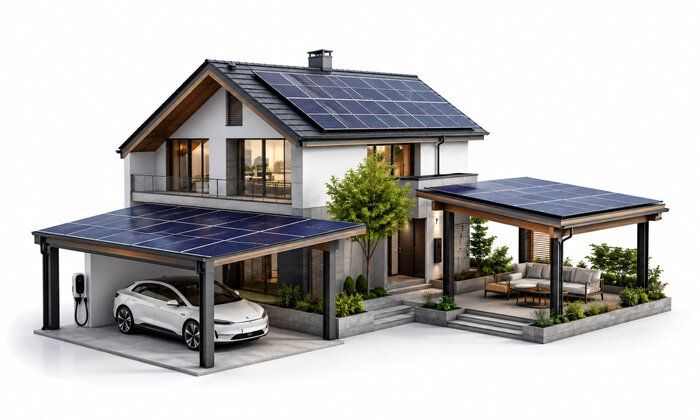
Solar panels do not need to be limited to the main roof.
Carports, pergolas, patio covers, garages, and other structures can provide additional installation surfaces while serving another practical function.
A solar carport can generate electricity while providing shade and weather protection for vehicles.
It also pairs naturally with EV charging because generation equipment and vehicle charging can be located within the same area.
Solar patio structures can provide similar benefits by creating usable shaded space while supporting an array above.
These designs require careful attention to structural loads, drainage, wind resistance, waterproofing, and electrical routing.
A polished solar installation includes more than attractive panel placement.
Inverters, disconnects, meters, junction boxes, batteries, monitoring devices, and conduit also influence the final appearance and serviceability of the system.
Equipment should be grouped in logical locations whenever practical.
Conduit routes can follow roof lines, pass through attic spaces, or connect neatly with existing utility areas instead of running unpredictably across exterior walls.
Organized equipment placement improves appearance while making future inspections, repairs, and upgrades easier.
It also leaves clearer pathways for future batteries, EV chargers, and additional solar capacity.
Solar panels are designed for long-term operation.
Knowing how long solar panels typically last helps explain why roof condition, mounting hardware, cable management, equipment access, and future maintenance should all be considered during the original design.
Panels may remain operational for decades, while inverters, batteries, communication hardware, and other components can have different replacement cycles.
The installation should make these components accessible without requiring major reconstruction.
Long-term planning also reduces the chance that future roofing or electrical work will require extensive solar removal.
Residential energy demand is evolving quickly.
Electric vehicles, heat pumps, electric water heating, induction appliances, smart electrical panels, and battery systems are becoming more common.
Solar systems designed in 2026 should account for this shift.
That does not necessarily mean installing an oversized array. It means avoiding design choices that make future expansion unnecessarily difficult.
Reserved electrical panel capacity, accessible conduit routes, compatible inverter architecture, and usable roof sections can support future upgrades.
A system designed around the home of tomorrow can remain more useful as electricity consumption changes.
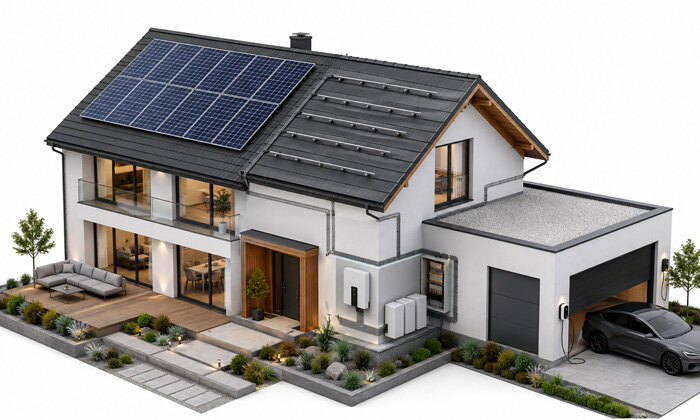
Expansion flexibility can add long-term value to a solar project.
A household may later add a second electric vehicle, battery storage, a home addition, pool equipment, or new electric appliances.
Leaving strategic roof space and electrical capacity can make those upgrades easier.
Expandable system architecture may include additional inverter capacity, spare breakers, accessible wiring pathways, and roof sections that can accommodate more modules.
Expansion planning should still account for utility interconnection limits, local permitting rules, structural capacity, and equipment compatibility.
The objective is not to predict every future change but to avoid locking the property into an unnecessarily rigid design.
Solar installation often overlaps with roofing, electrical upgrades, HVAC replacement, battery storage, and EV charger installation.
Coordinating these projects can reduce duplicated labor and avoid unnecessary changes later.
An electrical service upgrade can prepare the home for both solar and vehicle charging. A roofing project can address structural or waterproofing concerns before mounting hardware is installed.
Project planning also becomes easier with a realistic understanding of how long solar panel installation takes. The physical panel installation may be relatively short, while engineering, permitting, inspections, utility review, equipment availability, and permission to operate can extend the overall project timeline.
A coordinated schedule keeps related improvements aligned with the solar design.
Solar incentives can improve project economics, but technical design should remain focused on performance and suitability.
Tax credits, rebates, grants, utility incentives, and assistance programs vary by location and eligibility.
Interest in government programs that may help homeowners get free solar panels has also increased, although the structure of each program needs to be understood clearly.
Some programs provide genuine financial assistance, while commercial offers may use the term “free solar” for leases, power purchase agreements, or financed systems.
Regardless of financing structure, panel placement, roof condition, shading, equipment quality, electrical design, and realistic production estimates remain central to a successful installation.
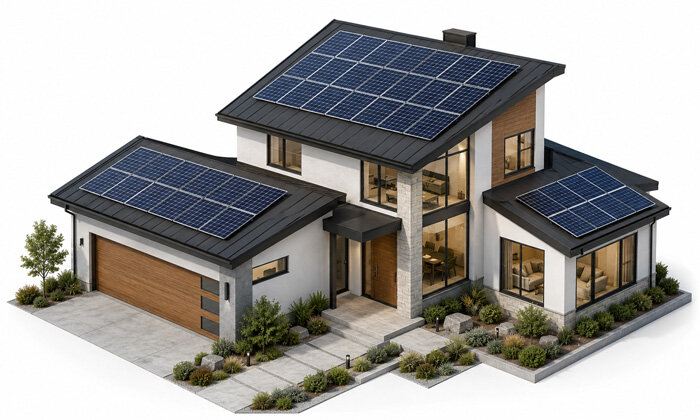
Complex roof geometry does not automatically prevent an efficient solar installation.
Panels can be distributed across different sections based on available space, orientation, shade, and daily sunlight exposure.
A main south-facing array can be combined with panels on a west-facing garage or an east-facing extension.
This type of arrangement can produce electricity across a broader part of the day.
Modern inverter technology makes multi-plane installations easier to manage because different sections can operate under different conditions.
Each roof plane should be evaluated based on expected production rather than forcing the entire array into a single orientation.
Architectural integration is one of the clearest residential solar design trends for 2026.
Panels are increasingly planned alongside roof shape, exterior finishes, sight lines, module color, equipment placement, and overall building proportions.
All-black modules, straight array edges, low-profile mounting systems, hidden conduit, and organized electrical equipment can create a more finished appearance.
Front-facing roofs benefit particularly from careful layout planning because the array becomes a highly visible part of the home's exterior.
Good architectural integration does not mean sacrificing major amounts of energy production. Many properties provide enough flexibility to achieve both strong performance and clean visual design.
The strongest solar layout is not always the one with the highest theoretical output.
Adding panels to heavily shaded sections, difficult roof areas, or awkward electrical zones may increase complexity without delivering meaningful additional energy.
A better design balances:
-
Energy production
-
Roof condition
-
Solar access
-
Panel orientation
-
Tilt
-
Electrical efficiency
-
Installation cost
-
Maintenance access
-
Battery compatibility
-
Expansion potential
-
Visual appearance
-
Long-term serviceability
A few carefully positioned panels can sometimes provide more practical value than a larger but poorly optimized array.
Do solar panels need planning permission or permits before installation?
Most solar installations require some form of local approval, permit, or electrical inspection, although requirements vary by location.
Rooftop systems may need building and electrical permits, while ground-mounted systems can involve additional zoning or setback rules. Utility approval may also be required before the system can connect to the grid.
How much roof weight can a solar panel system add?
A typical rooftop solar system adds several pounds of weight per square foot, including panels, mounting hardware, and racking.
Most modern roofs can support solar equipment, but older homes, damaged framing, or unusual roof structures may require a structural assessment before installation.
Are bifacial solar panels worth using on residential installations?
Bifacial solar panels can generate electricity from both the front and rear surfaces, making them useful where reflected light can reach the back of the modules.
They tend to perform best on elevated ground mounts, carports, light-colored roofs, and other installations with good rear-side exposure. Their advantage may be limited on panels mounted very close to a dark roof.
How far should solar panels be installed from the edge of a roof?
Required distances from roof edges vary according to local building codes, fire-access rules, roof design, and system size.
Setbacks provide space for emergency access, maintenance, drainage, and safe movement around the array. Installers should incorporate these clearances during the initial layout instead of adjusting the design after permitting.
Can solar panels withstand strong winds, hail, and severe weather?
Solar panels and mounting systems are designed to meet specific wind and mechanical load ratings, but performance depends on equipment certification, local weather conditions, roof structure, and installation quality.
Areas exposed to hurricanes, heavy snow, or frequent hail may require stronger mounting hardware, additional structural calculations, or panels tested for higher impact and load resistance.