Lithium batteries are used in almost every part of modern life. They power smartphones, laptops, tablets, electric bikes, power tools, solar energy storage systems, medical devices, drones, cameras, and electric vehicles. Because they are lightweight, rechargeable, energy-dense, and relatively reliable, lithium batteries have become one of the most common battery technologies in the world.
But one question appears again and again: how long does a lithium battery last?
The simple answer is that most lithium batteries last 2 to 10 years, depending on the battery type, usage pattern, charging habits, temperature, depth of discharge, and overall battery quality. In terms of charging cycles, many lithium-ion batteries last between 300 and 1,500 full charge cycles, while some high-quality lithium iron phosphate batteries can last 2,000 to 5,000 cycles or more.
However, battery lifespan is not determined by time alone. A lithium battery ages in two main ways: through cycle aging and calendar aging. Understanding both is the key to knowing how long a lithium battery can really last.
What Does “Battery Lifespan” Mean?
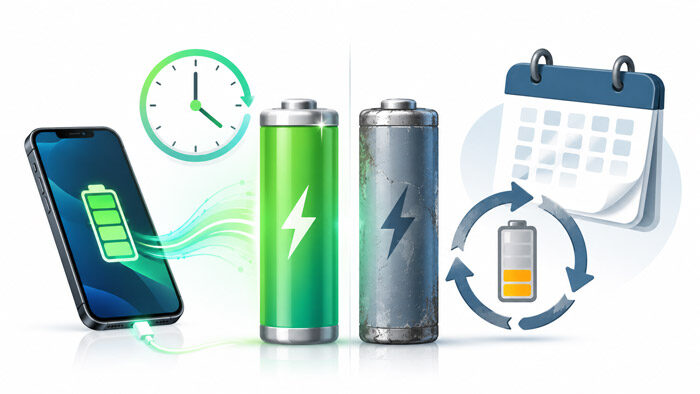
When people ask how long a lithium battery lasts, they may mean different things. Some people want to know how many hours a battery lasts on one charge. Others want to know how many years the battery can be used before replacement. Both questions are important, but they refer to different types of battery life.
Runtime means how long the battery powers a device after one full charge. For example, a smartphone may run for one day, a laptop may run for eight hours, and an electric bike may travel 30 to 80 miles depending on the battery size and riding conditions.
Lifespan means how long the battery remains useful before its capacity becomes too low. A lithium battery does not usually stop working suddenly. Instead, it slowly loses capacity over time. A battery that once held 100% of its original capacity may eventually hold only 80%, then 70%, and later even less.
In most industries, a lithium battery is considered near the end of its useful life when it holds about 70% to 80% of its original capacity. At that point, the battery may still work, but it will not provide the same runtime or performance as it did when new.
Average Lifespan of Lithium Batteries
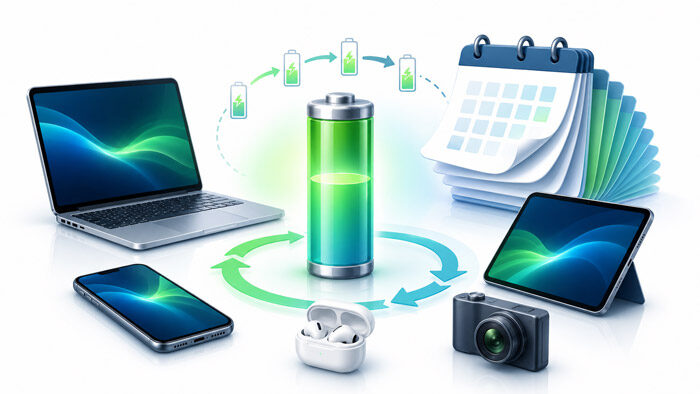
The average lifespan of a lithium battery depends heavily on the chemistry and application.
A typical lithium-ion battery used in smartphones, laptops, tablets, cameras, and small electronics usually lasts around 2 to 5 years. In cycle terms, this often equals about 300 to 1,000 full charge cycles.
Lithium batteries used in electric bikes, scooters, and power tools often last around 3 to 6 years, depending on how often they are charged and how hard they are used.
Electric vehicle lithium batteries are designed for longer service life. Many EV batteries can last 8 to 15 years, although their capacity gradually decreases over time.
Lithium iron phosphate batteries, often called LiFePO4 batteries, are known for long cycle life. They are commonly used in solar storage, RV systems, marine applications, backup power, and energy storage. A good LiFePO4 battery can last 10 years or more, with many rated for 2,000 to 5,000 cycles under proper conditions.
So while the general answer is “several years,” the more accurate answer depends on the battery chemistry, battery management system, usage habits, and environment.
Charge Cycles: The Main Measure of Lithium Battery Life
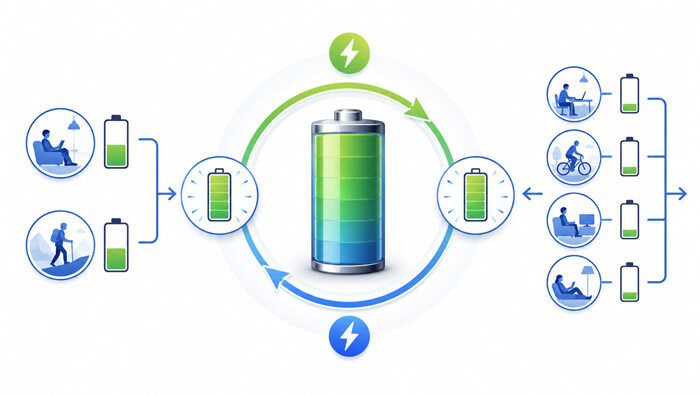
One of the most important ways to measure lithium battery lifespan is by charge cycles.
A charge cycle means using 100% of the battery’s capacity, but not necessarily all at once. For example, using 50% of the battery today and 50% tomorrow equals one full charge cycle. Similarly, using 25% of the battery four times equals one full cycle.
Lithium batteries do not have an unlimited number of cycles. Every cycle causes a small amount of chemical wear inside the battery. Over hundreds or thousands of cycles, this wear reduces the battery’s ability to store energy.
A standard lithium-ion battery may last around 500 full cycles before noticeable capacity loss. Some higher-quality cells can reach 1,000 cycles or more. LiFePO4 batteries are more durable and may reach several thousand cycles before dropping to 80% capacity.
However, cycle count alone does not tell the full story. A battery that is used gently may last much longer than one that is frequently drained to 0%, charged to 100%, exposed to heat, or used under heavy load.
Calendar Aging: Batteries Age Even When Not Used
Lithium batteries age even if they are not being charged or discharged. This is called calendar aging.
Inside a lithium battery, chemical reactions continue slowly over time. These reactions can reduce battery capacity and increase internal resistance. That means a battery stored for years may lose performance even if it has hardly been used.
Calendar aging is strongly affected by temperature and storage charge level. A lithium battery stored fully charged in a hot environment will age much faster than one stored partially charged in a cool place.
For long-term storage, many manufacturers recommend keeping lithium batteries at around 40% to 60% charge and storing them in a cool, dry location. Storing them at 100% charge for long periods can shorten their lifespan, while storing them completely empty can cause deep discharge and permanent damage.
Why Lithium Batteries Lose Capacity Over Time
Lithium batteries lose capacity because of chemical and physical changes inside the cells. During charging and discharging, lithium ions move between the positive and negative electrodes. Over time, this process becomes less efficient.
Several changes happen inside the battery:
The electrolyte gradually breaks down. The electrodes slowly degrade. A layer called the solid electrolyte interphase, or SEI layer, grows on the anode. Internal resistance increases. Some lithium becomes trapped and can no longer participate in charging and discharging.
These changes are normal and unavoidable. Even the best lithium battery will degrade eventually. The goal is not to stop aging completely, but to slow it down through proper use and storage.
Factors That Affect How Long a Lithium Battery Lasts
The lifespan of a lithium battery depends on several important factors.
Battery Chemistry
Not all lithium batteries are the same. Lithium-ion is a broad term that includes several chemistries. Common types include lithium cobalt oxide, lithium manganese oxide, lithium nickel manganese cobalt oxide, lithium nickel cobalt aluminum oxide, and lithium iron phosphate.
Some chemistries are designed for high energy density, while others are designed for long cycle life, safety, or high power output. For example, smartphone and laptop batteries are usually optimized for compact size and high energy density. LiFePO4 batteries are usually heavier but last much longer and offer better thermal stability.
Depth of Discharge
Depth of discharge means how much of the battery capacity is used before recharging. A battery regularly discharged from 100% to 0% experiences more stress than one used between 80% and 30%.
Shallow discharges are generally better for lithium batteries. For example, using only 30% or 40% of the battery before recharging can extend its total cycle life. This is why many electric vehicles and energy storage systems use software limits to avoid fully charging or fully discharging the battery.
Charging Habits
Charging habits have a major effect on battery life. Lithium batteries do not need to be fully discharged before charging. In fact, frequent deep discharges can shorten their lifespan.
Keeping a lithium battery between about 20% and 80% is often better for long-term health than constantly charging to 100% and draining to 0%. This does not mean you can never use the full capacity. It simply means that daily full charges and full discharges create more stress over time.
Fast charging can also increase heat and battery stress, especially if the battery does not have a good thermal management system. Occasional fast charging is usually fine, but using fast charging all the time may reduce battery life in some devices.
Temperature
Temperature is one of the biggest enemies of lithium battery life.
High heat speeds up chemical aging inside the battery. A lithium battery kept in a hot car, used in direct sunlight, or charged in a high-temperature environment may degrade much faster than one kept cool.
Cold temperatures can also affect performance. In cold conditions, a lithium battery may deliver less power and show reduced runtime. Charging a lithium battery in freezing temperatures can be especially harmful unless the battery has built-in low-temperature protection or heating.
For best results, lithium batteries should be used and stored in moderate temperatures. Room temperature is generally ideal.
Charging Voltage
Higher charging voltage gives more capacity, but it also creates more stress. Charging to 100% fills the battery completely, but it places the cells at a higher voltage, which can accelerate aging if maintained for long periods.
This is why some laptops, phones, and electric vehicles offer battery protection modes that limit charging to 80% or 85%. These modes reduce maximum runtime per charge, but they can help extend long-term battery lifespan.
Load and Discharge Rate
A battery used under heavy load wears faster than one used gently. Power tools, drones, electric bikes, and high-performance devices can demand large amounts of current. High current increases heat and stress inside the battery.
A battery designed for high discharge rates can handle this better, but all batteries still have limits. Using a battery beyond its rated discharge capacity can cause overheating, voltage sag, reduced performance, and shorter lifespan.
Battery Management System

Many lithium battery packs include a battery management system, often called a BMS. The BMS protects the battery from overcharging, over-discharging, short circuits, overheating, and excessive current.
A good BMS can greatly improve safety and extend battery life. It keeps the cells balanced and prevents dangerous operating conditions. Poor-quality lithium batteries may have weak or unreliable protection circuits, which can lead to faster degradation or safety risks.
How Long Does a Lithium Battery Last Per Charge?
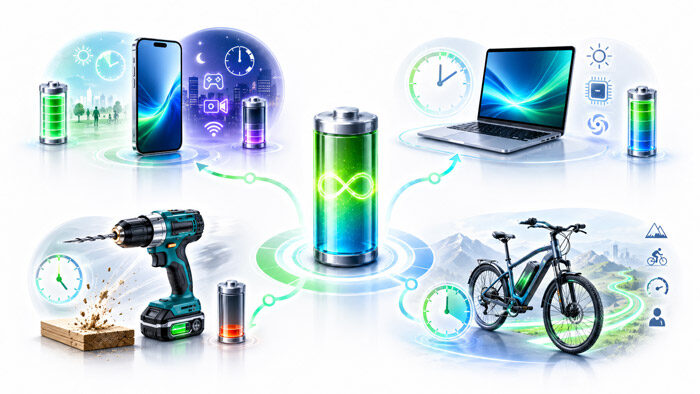
Runtime per charge depends on battery capacity and device power consumption.
A smartphone battery may last one day under normal use, but only several hours under heavy gaming, video recording, or hotspot use. A laptop battery may last 4 to 12 hours depending on screen brightness, processor load, battery size, and software efficiency. A cordless drill may run for minutes or hours depending on workload. An electric bike battery may last 20 to 80 miles depending on terrain, rider weight, assist level, speed, and battery capacity.
The formula is simple in concept: larger battery capacity usually means longer runtime, while higher power demand means shorter runtime.
Battery capacity is often measured in watt-hours, or Wh. A 500Wh battery can theoretically provide 500 watts for one hour, 250 watts for two hours, or 100 watts for five hours. In real use, efficiency losses and operating conditions affect the result.
Signs That a Lithium Battery Is Near the End of Its Life
A lithium battery usually shows warning signs before it completely fails.
One common sign is shorter runtime. If your device used to run all day but now needs charging by afternoon, the battery has likely lost capacity.
Another sign is faster charging and faster draining. A degraded battery may appear to charge quickly, but it also runs out quickly because it can no longer store as much energy.
Unexpected shutdowns are also common. A device may turn off even when the battery indicator shows 20% or 30%. This can happen when the battery’s internal resistance has increased and it can no longer deliver stable voltage under load.
Heat is another warning sign. If a battery becomes unusually hot during normal use or charging, it may be aging or damaged.
Swelling is a serious warning sign. A swollen lithium battery should not be used. Swelling can indicate gas buildup inside the cell, and the battery should be replaced safely.
How to Make a Lithium Battery Last Longer
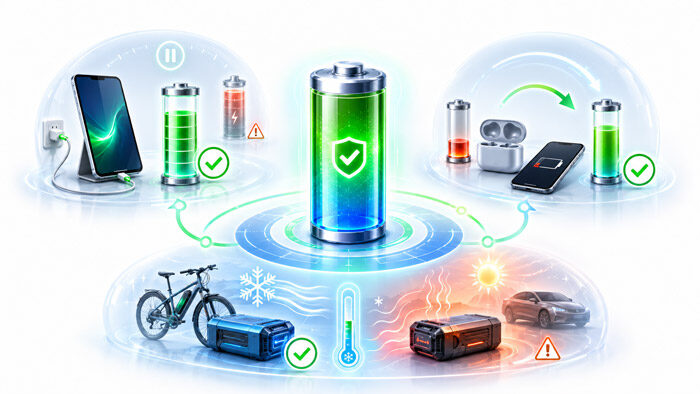
You cannot make a lithium battery last forever, but you can extend its useful life with good habits.
Avoid keeping the battery at 100% charge for long periods. Full charge is useful when you need maximum runtime, but it is not ideal for long-term storage or daily battery health.
Avoid draining the battery to 0% whenever possible. Deep discharge puts extra stress on lithium batteries. Recharging before the battery gets extremely low is better.
Keep the battery cool. Avoid leaving devices, battery packs, electric bikes, or tools in hot cars, direct sunlight, or near heat sources.
Use the correct charger. A charger with the wrong voltage or poor quality can damage the battery or create safety risks. For battery packs, always use a charger designed for that specific battery chemistry and voltage.
Store the battery properly. For long-term storage, keep the battery partially charged, usually around 40% to 60%, and store it in a cool, dry place.
Avoid unnecessary fast charging. Fast charging is convenient, but slower charging is usually gentler when time is not important.
Do not use damaged batteries. If a lithium battery is swollen, leaking, overheating, cracked, or giving off unusual smells, stop using it immediately.
Does a Lithium Battery Expire?
Yes, lithium batteries can expire in the sense that they lose capacity and performance over time. Even if a battery is never used, it will slowly age due to chemical changes inside the cells.
A lithium battery stored properly may remain usable for several years. A battery stored poorly, especially in heat or at full charge, may degrade much faster.
This is why buying very old replacement batteries can be risky. Even if the battery has never been used, it may have already lost some of its original capacity if it sat in storage for too long.
Is It Better to Replace or Keep Using an Old Lithium Battery?
If the battery still provides enough runtime and does not show safety issues, it can often continue to be used. Reduced capacity alone does not always mean the battery is dangerous.
However, replacement is recommended when the battery no longer meets your needs, shuts down unexpectedly, overheats, charges abnormally, or shows physical damage.
For critical devices, such as medical equipment, backup power systems, safety devices, or professional tools, it is better to replace aging batteries before they become unreliable.
For phones, laptops, and small electronics, replacing the battery can often restore much of the device’s original usability.
Lithium-Ion vs. LiFePO4 Battery Lifespan
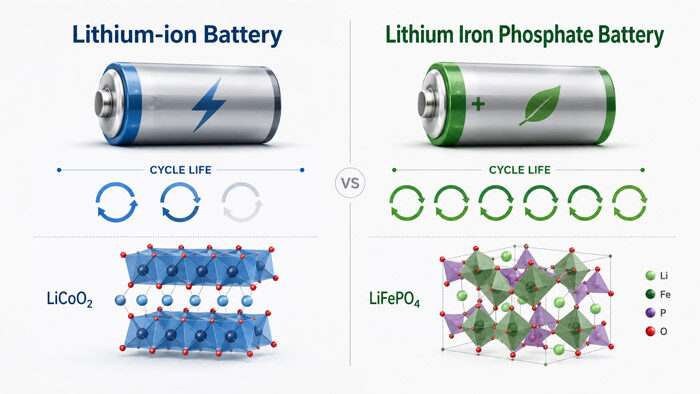
Lithium-ion and LiFePO4 batteries are both lithium-based, but they have different strengths.
Traditional lithium-ion batteries usually offer higher energy density, which means they can store more energy in a smaller and lighter package. This makes them ideal for smartphones, laptops, cameras, drones, and electric vehicles.
LiFePO4 batteries usually have lower energy density, but they offer excellent cycle life, strong thermal stability, and long-term durability. They are widely used in solar systems, RVs, boats, off-grid power, backup batteries, and other applications where long life and safety are more important than compact size.
If the main goal is maximum portability, lithium-ion is often preferred. If the main goal is long service life, LiFePO4 is often the better choice.
See also: LiFePO4 Battery vs Lithium-Ion Battery: A Comprehensive Comparison
FAQs
Are lithium batteries safe for daily use?
Yes, lithium batteries are generally safe when they are made with quality cells, protected by a reliable battery management system, and used with the correct charger.
Safety risks usually come from physical damage, poor-quality batteries, overheating, overcharging, short circuits, or using incompatible charging equipment.
Why do lithium batteries sometimes catch fire?
Lithium batteries may catch fire when internal short circuits, overheating, manufacturing defects, punctures, or improper charging cause thermal runaway.
Thermal runaway is a chain reaction where the battery temperature rises rapidly and becomes difficult to control. This is why damaged or swollen batteries should never be used.
Can lithium batteries be recycled?
Yes, lithium batteries can be recycled through proper battery recycling programs.
Recycling helps recover valuable materials such as lithium, cobalt, nickel, copper, and aluminum. They should not be thrown into regular trash because they may cause fire risks and environmental pollution.
What is the difference between lithium batteries and alkaline batteries?
Lithium batteries usually provide higher energy density, lighter weight, better performance under load, and longer shelf life than alkaline batteries.
Many lithium batteries are rechargeable, while most alkaline batteries are single-use. Lithium batteries are commonly used in high-drain devices, while alkaline batteries are often used in low-power household products.
Can lithium batteries be repaired or rebuilt?
Some lithium battery packs can be rebuilt by qualified technicians, especially larger packs used in e-bikes, tools, or energy storage systems.
However, repairing lithium batteries is not recommended for untrained users because incorrect handling can cause short circuits, fire, or cell imbalance. In most consumer electronics, replacement is usually safer than repair.